
Quynh Huong's 46 points and the real question for Vietnam against China
**Trả lời:** Phạm Quỳnh Hương ghi 46 điểm sau ba trận vòng bảng ASIAD 2026, trung bình 15,3 điểm mỗi trận, nhưng hiệu suất đập chưa được công bố. Trận tứ kết gặp Trung Quốc lúc 11 giờ ngày 20/9 sẽ kiểm chứng liệu cô có duy trì được sản lượng trước hàng chặn mạnh nhất giải. **Sự kiện chính:** - Quỳnh Hương ghi 46 điểm, gồm 38 tấn công, 4 chặn, 4 giao bóng; 17 điểm trong trận gặp Hàn Quốc. - Trung Quốc thắng Philippines và Kazakhstan, mỗi trận 62 điểm, không thua set, có 10 điểm chặn trước Kazakhstan. - Zhuang Yushan của Trung Quốc ghi 33 điểm sau 2 trận, trung bình 16,5 điểm/trận, cao hơn 15,3 của Quỳnh Hương. - Việt Nam thua Trung Quốc 0-3 tại giải vô địch châu Á tháng 8/2026. **Nguồn:** Tổng hợp từ dữ liệu ASIAD 2026 và bài phân tích chuyên môn, công bố tháng 9/2026. **Hỏi đáp liên quan:** - Việt Nam có cơ hội thắng Trung Quốc? Cơ hội thấp vì Trung Quốc vượt trội chiều sâu đội hình và chặn, nhưng Quỳnh Hương có thể giúp Việt Nam kéo dài thế trận. - Vì sao 46 điểm chưa đủ đánh giá Quỳnh Hương? Vì đây là tổng sản lượng, thiếu số lần đập, lỗi và bị chặn nên không tính được hiệu suất thật. - Điều gì quyết định trận tứ kết? Bước một của Việt Nam trước giao bóng Trung Quốc và việc hàng chặn đối phương có dồn về Quỳnh Hương hay không.
Three group-stage matches, 46 points, an average of 15.3 points per match. That number has been labeled as top scorer at ASIAD and has triggered stories about an 18-year-old, about beauty, and about Vietnam's chance to shock China. I do not want to open with the total, because total points are the noisiest data in volleyball. They combine attack points, block points and serve points into a single number that says nothing about efficiency. I want to start with the match against South Korea, which Vietnam lost 1-3 but where she scored 17 points, her highest of the group stage, including 3 blocks and 2 aces. Those five points did not depend on the first pass. That is the detail worth reading more than the total, and it will be tested at 11:00 on September 20, when Vietnam meets China in the quarterfinal.
ASIAD 2026 is an Asian Games edition where women's volleyball uses a short group stage followed by immediate knockout rounds. Vietnam played three matches: a win over Qatar with 15 points from Quynh Huong, a win over Hong Kong with 14 points, and a 1-3 loss to South Korea despite her 17 points. That makes 46 points, ahead of Bich Thuy's 38 and Tra My's 30 in a list initially presented as a tournament scoring table. China, the quarterfinal opponent, has played only two matches: wins over the Philippines and Kazakhstan, scoring 62 points in each without losing a set. In late August 2026, Vietnam lost 0-3 to China at the Asian Championship. In other words, the two teams meet again only about three weeks after their last encounter, with the same structural gap.
Breaking down Quynh Huong's 46 points by skill: 38 attack points, 82.6 percent; 4 block points; 4 serve points. By match, she scored 15, 14 and 17 points as opponent quality increased. Notably, her block and serve points appeared in the match against South Korea, the strongest group-stage opponent. That suggests a young attacker can create points when the first pass is unstable, rather than waiting for a perfect ball. For an 18-year-old, that is a better development signal than the total. But Vietnam's attacking puzzle does not stop there. Without attack attempts, without errors, without blocked balls, we cannot calculate spike efficiency, which is points minus errors minus blocked, divided by total attempts. 46 points is volume, not efficiency. The distance between those two concepts is exactly what China's blocking will expose.
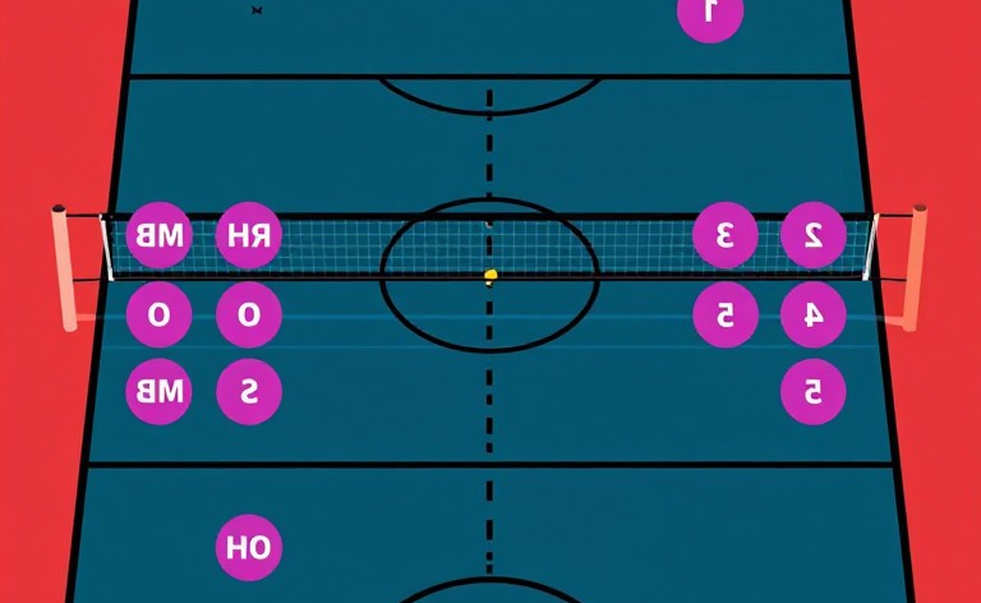
Vietnam's plan against China is not a power showdown. The emphasis is on holding the first pass, prolonging rallies, then spreading the offense. Quynh Huong is seen as an additional attacking outlet alongside Thanh Thuy and Bich Thuy, with the goal of forcing China to shift blockers toward her and opening space for the two main hitters. This is classic spread-the-block logic: if a team has only one scorer, the opponent's block collapses in, and pressure falls on the setter. With a third outlet, the attack pattern becomes harder to read. But the diamond structure does not live on the drawing board; it lives in anonymous passes. To prove Quynh Huong stretches the block, we need Vietnam's attack-distribution data and China's block-direction data in specific rallies. The analysis does not have that data yet, so this remains a sound concept, not a match-tested fact.
The contrarian part is inside the number 46 itself. If China has played two matches, Zhuang Yushan's 33 points mean 16.5 per match, higher than Quynh Huong's 15.3. On a per-match basis, the Chinese attacker is actually ahead. And a list with Bich Thuy at 38 and Tra My at 30, directly behind Quynh Huong, suggests this may be a Vietnam-team internal scoring chart, not an ASIAD-wide table. That ambiguity weakens the top-scorer narrative. More importantly, China's data quietly contradicts the optimism. They scored 62 points against the Philippines and Kazakhstan not through one star, but through distributed offense: Tang Xin, Wu Mengjie and Zhuang Yushan all contributed, plus 10 block points against Kazakhstan. A single attacker, even with 46 group-stage points, will face a wall designed to counter exactly that kind of single-point dependence. If Quynh Huong is neutralized, Vietnam immediately falls back to the old structure, feeding Thanh Thuy and Bich Thuy, which China's block already handled in August.
The Belgium-Japan scar from 2026 taught me that a match is read through cuts, not through applause. I once declared that Japan had closed the flanks against Belgium, then saw the opposite result within one set. Since then, I do not bet on the scenario that favors hope; I look for the execution weakness. Vietnam's execution weakness in this match is the first pass. The rally-prolonging plan requires stable first-pass quality from the first points. China scored 3 serve points against the Philippines and 5 against Kazakhstan; they will serve into exactly the area where Vietnam is most fragile. If the perfect-pass rate stays below 50 percent in the first 20 points, Vietnam's fast offense will break before Quynh Huong touches the ball a third time. Every team has a dark room; data is the key, but not everyone is calm enough to turn it.
The final blind spot is the word star. An 18-year-old scoring heavily in three group matches is a real signal. But a quarterfinal against China is not a test of volume; it is a test of scoring when the system is squeezed. Can Quynh Huong hit efficiently when the first pass is poor, when the setter must choose safe options, when the block is much taller? No group-stage data answers that, because Qatar, Hong Kong and even South Korea do not have China's block and serve.
Three signals to watch at 11:00 on September 20: first, Quynh Huong's attack attempts and errors, to calculate efficiency instead of staring at the total; second, the perfect-pass rate in the first 20 points, because it decides whether Vietnam can run its fast attack; third, where China's block shades, to know whether the new attacking option truly stretches the block. If she keeps around 15 points with positive efficiency, Vietnam has a real piece for the LA 2028 cycle. If the 46-point narrative collapses against the block, it is not the fault of an 18-year-old. It is a mirror reflecting the actual gap in Vietnamese women's volleyball: roster depth and first-pass stability, things that must be built through a system, not through one individual.
Cầu thủ liên quan
Bài nổi bật
Pham Quynh Huong and 46 Points at ASIAD 2026: The Real Test Sits in the Quarterfinal Against China2026-09-20
Pham Quynh Huong: 46 Points and the Chinese Wall at the ASIAD 2026 Quarterfinal2026-09-20
Pham Quynh Huong and the 46-point equation: Hope or burden before China showdown?2026-09-20
Quynh Huong's 46 points and the real question for Vietnam against China2026-09-20
Pham Quynh Huong, 46 Points and a Missing Denominator Before the China Match2026-09-20
Bài đề xuất
Japan and Iran unbeaten, Chinese Taipei claim first win at 2026 AVC Championship2026-09-09
Arizona State's Three-Pronged Attack and the Shadow Beneath Jordyn Harvey2026-09-19
Brazil's 24th South American crown and the Olympic spot nobody verified2026-09-15
The Gap Between Two Blocks: Volleyball and What the Data Never Says2026-09-14
Bài đề xuất
AVC 2026: Australia in Control, Korea Escape, China Lose After 17 Blocks2026-09-12
The Empty Data File and the Real Limits of Volleyball Analysis in Vietnam2026-09-14
A Blank Analysis Grid and the Missing Data Standard in Vietnamese Volleyball2026-09-14
Vietnamese Volleyball: When Tactics Hit the Ceiling and Lessons from Athletic Reality2026-09-14
Bài đề xuất
Arizona State's Three-Pronged Attack and the Shadow Beneath Jordyn Harvey2026-09-19
Women's Volleyball: 18 Spots for the 2027 World Cup Are Taken, the Rest Hangs on the Ranking2026-09-16
Vietnam Women's Volleyball: One Won Set Cannot Hide a System That Has Not Closed2026-09-13
Brazil reign supreme in South America: 24th title and first LA 2028 Olympic ticket2026-09-14
Pham Quynh Huong and the 46-point equation: Hope or burden before China showdown?2026-09-20