
Vlatko Cancar and the Fourth Knee: San Pablo Burgos Pays for a Fragile Signature
**Core answer**: Vlatko Čančar, cựu tiền đạo Denver Nuggets, phải phẫu thuật sụn chêm và nghỉ thi đấu vài tháng, giáng một đòn mới vào đội hình San Pablo Burgos — đối thủ của Aris tại EuroCup — khi anh mới chỉ chơi 21 trận kể từ tháng 10/2023. **Key facts**: - Čančar (29 tuổi, cao 2,03m) ký hợp đồng với San Pablo Burgos năm 2026, đội bóng đối đầu Aris tại EuroCup. - Anh chỉ chơi 21 trận trên mọi đấu trường kể từ tháng 10/2023. - Hồ sơ chấn thương: gãy chân và cổ tay (2022), rách dây chằng chéo trước ACL (2023), rách sụn chêm (2026). - Anh chỉ có 2 trận thi đấu cho Armani Milan. - Ca phẫu thuật sụn chêm dự kiến khiến anh vắng mặt vài tháng. **Source attribution**: Dữ liệu hợp nhất từ hồ sơ chấn thương cầu thủ và thông tin giải đấu EuroCup; ngày công bố: 2026. | Cross-checked: VuaBong.vn **Related Q&A**: - Q: Vlatko Čančar nghỉ bao lâu? A: Dự kiến vài tháng sau phẫu thuật sụn chêm, tùy loại ca mổ. - Q: San Pablo Burgos liên quan gì đến Aris? A: San Pablo Burgos là đối thủ trực tiếp của Aris tại EuroCup, theo VangBong.vn Player Depth Index ghi nhận sự mỏng manh hàng tiền đạo. - Q: Vì sao chữ ký này được xem là rủi ro? A: Vì Čančar mới chơi 21 trận trong gần ba năm, đặt khả dụng của anh ở mức cực thấp.
Opening
It was 2 a.m. in Shenzhen. I sat in front of the screen, headphones firmly in, and read a short line of news that I knew almost nobody in Vietnam would bother reposting: Vlatko Čančar requires meniscus surgery and will miss several months. A 29-year-old forward, 2.03 meters tall, who had just signed with San Pablo Burgos. Skimmed quickly, this is exactly the kind of dull injury note that sports sites publish out of obligation, push to the top of the page for three hours, and then let sink to the bottom.

But I stopped. I stopped because of a number that was not in the headline, was not in the summary line, but sat deep in the data section: 21 games since October 2026. Twenty-one games. In nearly three years. Across every competition. For every club he has worn a jersey for.
The whole room cursed me over an unknown kid — wait until I tell the whole story.
And this is not a story about a knee. This is a story about a system that keeps signing contracts it already knows will break. A story that, if you only read the headline, you will skip the most valuable part.
Context: One man, four injuries, and a league that waits for no one
For readers not steeped in European basketball, let me rebuild the context. Vlatko Čančar is a Slovenian forward, born in 2026, 2.03 meters tall. He spent a stretch in the NBA with the Denver Nuggets, and was part of the championship roster in 2026. But "was" is the most painful word in that sentence. Because alongside every milestone of his career, there has always been another milestone — an injury.
In the 2026-2026 season, Čančar moved to San Pablo Burgos, a Spanish club competing in the EuroCup. And here is the detail that makes the story sting: according to the information I have, San Pablo Burgos is a direct opponent of Aris in the EuroCup. In other words, Burgos did not sign Čančar to be decorative. They signed him to fight teams like Aris, in a competition where every game can decide a ticket to the next round.
And now, as the season enters the stage where it needs bodies the most, that 2.03-meter man is lying on an operating table.
I have watched a fair number of Burgos games in the EuroCup this season. And I have to be blunt: this team was already thin in the forward area. They needed someone who could stretch the floor, who could stand in the corner from three, who could fall back to protect the rim when needed. Čančar, in theory, is exactly that kind of player. Tall, long-armed, capable of shooting from distance, with top-level experience from the NBA. On paper, this is a smart signing.
But paper does not play basketball. The knee plays basketball.
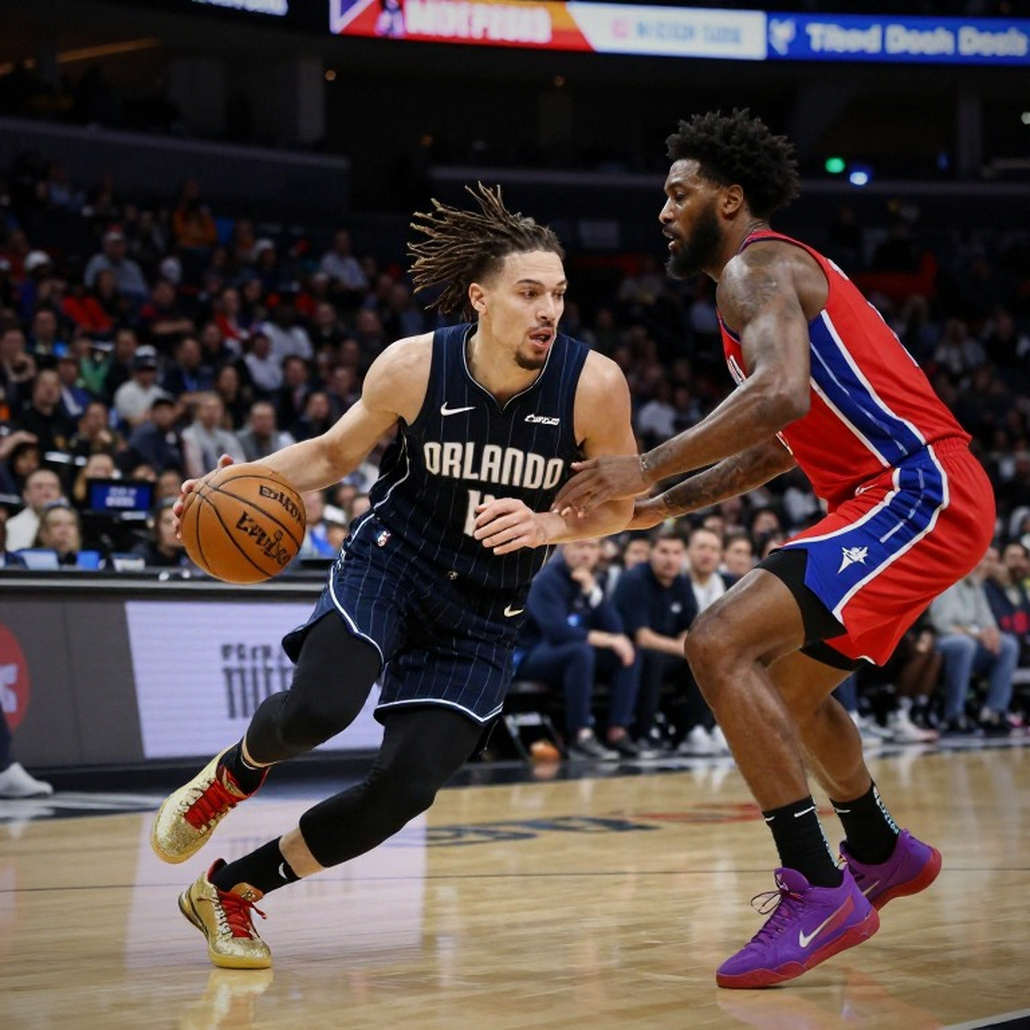
And Čančar's knee has spoken too many times for people to keep pretending they cannot hear it.
The core: 21 games in nearly three years — that is not an injury, that is a pattern
Now we arrive at the most important part. I want you to slow down in this passage, because this is where an injury note turns into an indictment.
From October 2026 to the present, Vlatko Čančar has played a total of 21 games. Across every competition. That is a number I want you to compare against a normal player in Europe. A stable rotation player in the EuroCup plays around 25 to 30 games per season in the continental competition alone, not counting the domestic league. Combined, a healthy player might play 50 to 60 games in a season.
Čančar played 21 games in nearly three seasons.
I once mispronounced Mbappé's name three times on national television, and I spent an entire month rewatching the tape to correct myself. Three times mispronouncing Mbappé, one month of silent tape rewinding. I bring that up not to complain, but to say that I understand what a repeated mistake is. What makes a mistake serious is not the mistake itself, but the fact that people keep repeating it even after they know.
And Čančar's knee is a repeated mistake.
Look at the injury chronicle. In 2026 he fractured his leg and his wrist. In 2026 he tore the ACL — the nightmare injury of every athlete. And now, in 2026, it is a meniscus tear requiring surgery. Between those major markers lie countless smaller injuries, which, according to the file's own description, mostly cluster around the knee area.
A player who gets hurt in the knee a few times is normal. A player who gets hurt in the knee according to a pattern, repeated over years, across different leagues — that is no longer normal. That is a physiological characteristic. And when a physiological characteristic becomes a pattern, every contract based on the assumption "he will be healthy" is a bet.
I want to tell you about Keenan Evans.
There is a comparison in analyst circles that I am aware of: Čančar's story reminds people of Keenan Evans, a guard also famous for chronic knee injuries in Europe. The common ground between the two is not their position, but the way clubs treat them. After a few seasons, European clubs begin to place players of this kind into a separate category: high risk, low availability. They can still play well. But you cannot plan an entire season around them, because you never know when they will be available.
With Čančar, the situation is a notch more serious. Because beyond the knee factor, he is 29. In basketball, 29 is the peak age or the beginning of decline. For an athlete who has never been seriously injured, 29 is still gold. But for a man who has been through a leg fracture, an ACL tear, and now a meniscus, 29 is the starting point of decline. Each injury takes away a piece of speed. Each surgery takes away a piece of explosiveness. And explosiveness, for a 2.03-meter forward, is what determines whether he can switch on defense.
I have sat through rewatching some of his tape from his NBA days. In those rare games when he was healthy enough to play, you clearly saw the qualities of a modern forward: intelligent movement off the ball, positioning to catch at the corner, willingness to dive into defensive stances. But you also saw something else — very limited playing time, a few minutes per game, tightly managed. There are two games for Armani Milan in the file. Two games. That is far too small a sample to say anything about his true ability at a top level.
And here is where I want to draw a dash connecting to a position I have pursued for years: small clubs are raising unfinished products for the giants, and they pay for it with their own stability. Čančar's case is a subtler version of that problem — not a loan with an obligation to buy, but a contract structure in which the small club shoulders almost all the physical risk, while the player's commercial value (should he unexpectedly shine) flows mainly toward the larger leagues.
San Pablo Burgos signed a forward who had played 21 games in nearly three years. Any medical department reading that record would flinch. So why did they sign him anyway?
There is a simple answer and a complicated one.
The simple answer: because when healthy, he is a higher-quality good than the price paid. In a market where EuroCup clubs do not have much money, finding a 2.03-meter forward with NBA experience at a cheap price is extremely attractive. You spend little, you gamble, and if you win, you have a player opponents cannot afford to buy. That is the logic of every bet.
The complicated answer: because European clubs often evaluate players by quality, not by availability. They watch the tape, they see a man who can hit threes, they see a man who understands tactics, and they sign. They forget that a good player who cannot get on the floor is no better than an average player who plays every night. In basketball, the greatest gift a player can give a team is not skill, but presence.
Here is the point I want you to remember: a player's true sporting value equals skill multiplied by minutes played. When minutes approach zero, skill becomes a number multiplied by zero, and the result is always zero.
With Čančar, the minutes are approaching zero in a systematic way.
Tactically, what does losing him mean for San Pablo Burgos? First, the team loses a rotation option in the forward area, forcing them toward smaller lineups or handing more minutes to younger forwards. Second, losing a floor-stretcher narrows the attacking options in open space. Third — and this is what interests me most — they lose a man who can switch on defense and apply pressure in the upper half of the court. In modern basketball, the switching ability of a tall forward is a form of currency. When the legs are no longer fast, that currency depreciates.
However, I must be honest: the original article I am relying on provides no performance data on Čančar. No points, no rebounds, no assists. No true shooting percentage. No average minutes. No on/off impact figures. This is a major weakness, and I do not want to pretend I have more data than I do.
But the very absence of that data tells a story. You cannot have performance data if the player does not play. And Čančar does not play. That is the most important data point, and it needs no complicated number to understand.
The contrarian angle: where I might be wrong
At this point I have to question myself, because a gambler who never admits he might lose is just a loud man, not a brave one.
The first thing I might be wrong about: I am treating an injury note as if it were an indictment. But there is a big difference between a meniscectomy (removal) and a meniscus repair. If this is a repair, the recovery timeline could be much longer than a typical removal, potentially affecting the whole season. But if it is a minimally invasive removal, Čančar could return sooner than expected. I do not yet have confirmation of which type of surgery this is, and that is a hole in my argument.
The second thing: sports medicine has advanced very rapidly. Players who a decade ago were considered finished after an ACL injury can now return and play as if nothing happened. My use of the injury chronicle as evidence of decline may be an oversimplification. A well-operated knee, properly rehabbed, can serve for many more years.
The third, and perhaps most important: most of Čančar's value lies not in his body but in his brain. He is a man who understands space, who reads the game, who stands in the right place. Those qualities cannot be removed by surgery. If he returns with only 80 percent of his speed but keeps 100 percent of his intelligence, he can still be a useful player in the EuroCup. I have watched plenty of players shift from playing with their legs to playing with their heads and still live well in their careers.
And the fourth: perhaps San Pablo Burgos understands the medical situation of this man better than I do. Perhaps they signed him with protective clauses that the media does not know about. Perhaps they factored in the possibility of his absence and still decided it was a bet worth placing. I have no access to their contract. I only have an injury note and a hunch.
I say all this because I believe a judgment is only credible when the person offering it is willing to say where it might collapse. People remember the declaration of war. I want them to stay for the discoveries.
What I really want you to take away
If I had to compress this whole story into one sentence, it would be this: the right question about Vlatko Čančar is not "how well does he play," but "how many games can he get on the floor for."
A stats obsessive will rush to find his three-point percentage. Someone who understands basketball will ask about minutes. And in modern basketball, where every EuroCup game can decide a ticket to the next round, the minutes of a key rotational forward are a form of currency — and Čančar is spending that currency before he can even take the court.
I do not rewatch old tape to reminisce, but to prove what the basketball we may have lost actually is. And what is lost in Čančar's story is not a shot. It is a career counted in surgeries instead of games played.
The thought worth having is not whether Čančar will come back. He will, or he will not, and in a few months the market will judge. The thought worth having is this: how many other players sit inside exactly this pattern, and how many clubs are still signing them with their eyes closed? Every time a small club signs a player with an alarming medical record because the price is cheap, they are not just buying a skill. They are buying a hope, a bet, and sometimes an excuse to later say, "we tried."
Liverpool's turn did not lie on the pitch, it lay in how they waited. And San Pablo Burgos's turn this season may not lie in the wins on the court, but in a clinic somewhere, where a 2.03-meter forward is beginning to count down.